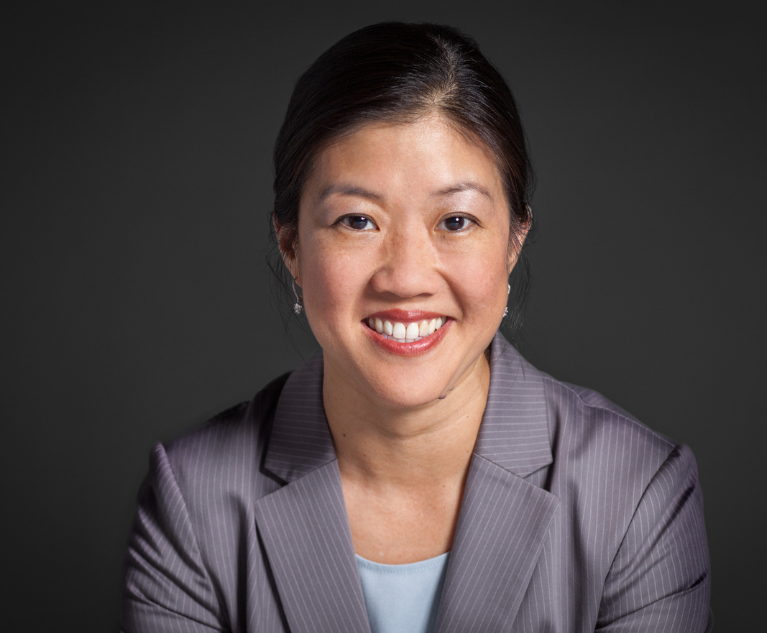
In a consulting market marked by volatility and cautious client spending, Pariveda CEO Margaret Rogers is steering the firm not by chasing the latest trends in technology, but by remaining anchored to its core value: a deep, unwavering investment in its people. Rogers asserts that this long-standing, people-centric culture is the firm’s primary strategy for navigating current industry challenges, from the AI boom to the future of talent development, by fostering the kind of genuine partnership that clients now seek more than ever. Consulting Magazine took a recent opportunity to get Rogers’ thoughts on her history, philosophy and the state of the industry.
Consulting: Tell us about your personal path to where you are today and what led you to the consulting world.
Rogers: I’m a lifetime consultant. I studied electrical engineering and computer science in school, but I wasn’t exactly sure what I wanted to do. A professor I really connected with opened up the path of signals and systems, which I found fascinating — lots of theory and math, Fourier transforms. I don’t think I could even spell Fourier anymore, but I really enjoyed it back then.
At a crossroads, I was considering joining that professor’s team in the workplace, but I also had an opportunity to explore consulting, which felt like this nebulous, undefined thing — and that actually intrigued me. I love learning about new things, even if I wasn’t totally sure how much control I’d have over my career at the time. So, I did what many would do: I joined one of the Big Six consulting firms, Anderson Consulting.
It was the dot-com era. Everyone was getting online, and there was a surge in key packaged software. Y2K was looming — a lot of firms needed to upgrade their systems from two-digit to four-digit years. Consulting firms were making a lot of money sending in teams to update those systems.
That era also saw the birth of websites and digital experimentation. No one really knew how the internet would become profitable, but some thought selling products online might work. It was early — lo-fi user interfaces, early content management systems, basic targeting, personalization just emerging.
That’s when I got hooked on digital and user experience, which was barely a field at the time. I ended up leaving Anderson Consulting as it became Accenture and split from Arthur Andersen. I joined what we called the ‘Little Six’ — digital hybrid agencies that mixed creative and technical talent.
I got to work with incredible brands like Polo and Liz Claiborne. It was fun, fast and formative. I learned about digital interaction design and how people engage with experiences online. After a few years, when the dot-com bubble burst, I decided to start my own firm. I hadn’t started a family yet, my husband was supportive, and I figured it was a good time to try.
Eventually, I sold the company, and to be honest, it turned out to be one of the worst decisions I’ve made. But I learned a lot. Later, a friend told me about this consulting firm called Pariveda that was “the place I’m going to retire from.” That was wild to hear in consulting. I checked it out and found a firm that genuinely cared about people.
I didn’t expect to become CEO. There were many people more seasoned than I was when I joined. But when the opportunity came, I applied. I remember getting the call — it was unexpected but deeply humbling. To lead a firm that has been so well thought out, one that fills a gap in this world that really needs it, with its people-first mission and focus on helping others grow, has been one of the greatest privileges of my life thus far. I live to serve our people and our clients every single day in hopes of bringing our firm into a new chapter.
Consulting: Tell us your perspective on the current state of consulting, and what are clients wanting from a consulting partner in 2025 and beyond?
Rogers: The consulting market in 2025 is definitely volatile. We've seen contraction across firms, and COVID really upended how we all did business. Every knowledge worker was suddenly remote, which changed the game for consulting, since it is a field historically built on relationships and in person presence.
Without the ability to bump into clients in hallways or share spontaneous conversations, we had to adapt quickly. Then came inflation, talent shortages and skyrocketing expenses, all of which fueled the Great Resignation. Now, we're seeing the market try to correct itself, with clients becoming much more cautious and deliberate in their spending.
So, what are clients looking for in a consulting partner now? They want someone truly invested in their success, not just someone who will deliver to the contract, but someone who will stand by them when things get tough and help them see around corners. Life rarely goes exactly to plan, and clients need partners who will navigate the unknown with them.
They’re looking for partners who bring new ideas, who challenge assumptions and who genuinely care. That’s core to who Pariveda is. We want to work with clients who share our values and who recognize that we live those values every day, not just internally, but in the work we deliver. Whenever we work with a client, we are who we are. We care about creating real partnerships rooted in trust, insight and aligned purpose.
Consulting: Tell us the origins of Pariveda, its growth and success.
Rogers: Pariveda was founded by a brilliant leader, Bruce Ballengee, who had spent years in consulting and was considered the guy you call when your project is in crisis. He has this incredible ability to see patterns and fix these complex problems with elegantly simple solutions. At some point, he realized there had to be a better way to build a consulting firm, one that didn’t just say “people are our most valuable asset”, while hypocritically working them 60-80 hours a week with no care about their quality of life or family life. He believed you could build a successful firm that was designed around valuing people first.
So he set out to create a human-centric firm from the ground up. That meant making decisions based on the development and success of people — not just profitability or speed. He believed that if we invested in people the right way, we’d not only develop better leaders but also solve problems more effectively and sustainably. And given the global talent shortage, that kind of long-term thinking matters more than ever.
Bruce made intentional choices, like implementing a transparent salary structure and creating clear expectations around behaviors and what “good” looks like for every role in our company – from the fresh out of college associate to the VP who is a year from retirement. He built a values-driven culture, and that’s still what guides us today.
Pariveda was born out of necessity, not just for the short term, but for the next 100,000 years. We need more firms like this and more people think differently to solve the world's more pressing problems.
Pariveda was founded in 2003, so we’re coming up on 22 years in October. We know we develop well rounded leaders who think differently and creatively. We continue to change and evolve as the world evolves. With the pace of change increasing, we see our mission of developing people to lead through this VUCA world a huge component of why we exist. We need more leaders who lead through values and seek multi-layered wins for many people. Not just a small group.
We’re privately owned and structured as an ESOP (Employee Stock Ownership Plan) in the U.S., which means our people have a stake and ownership in what we build. We’re now also expanding internationally and seeing that our values resonate across cultures, which is both validating and exciting.
One of my responsibilities as CEO is to scale that impact — to take what we’ve built and expand it with integrity and intention.
Consulting: What market trends (outside of technology and AI) do you see shaping our industry in the next five years?
Rogers: One of the biggest shifts ahead is how we engage and support a more generationally diverse workforce. We’re seeing more micro-generations, not just Gen Z or Millennials, but subgroups within them, each with their own expectations, shaped by their digital and consumer experiences. These expectations are starting to define what people want from their work environments.
Organizations will have to be much more intentional about creating experiences that feel personal and meaningful, while still aligning with team and company goals. That means designing environments where individuals understand what’s expected of them, how they contribute to their team, and how their work connects to the larger mission. So it isn’t just about personalization for the sake of the individual, but also about their greater alignment and empowerment within the organization.
Another trend is the need for speed and adaptability. Many companies still struggle to move as fast as they want to. Whether it’s reacting to global supply chain disruptions or rapidly changing policies, the pace of change isn’t slowing down. Businesses will need to figure out how to hedge risks across their value chains, like how they source materials or respond to regulatory shifts, and how to do that with more agility.
And I think we’re going to see a swing back toward ESG. Right now, there’s a bit of whiplash — we’ve gone from hyper-focus on ESG to push back, and now we’re trying to find a middle ground. Just like with return-to-office conversations, we’re looking for that equilibrium. In the next five years, I expect we’ll see a more balanced approach to purpose, sustainability, and long-term responsibility come back into focus.
Consulting: In light of how the workplace has evolved since COVID, where has your firm landed in terms of balancing client/employee needs, productivity and satisfaction?
Rogers: We’re still actively balancing it. When COVID hit, we knew right away we wouldn’t be back in the office for at least two years. And sure enough, two years later, we found ourselves having to encourage people to return, not because we didn’t trust them while working from, but because something important was missing.
At Pariveda, we don’t rely on surveillance tools. No badge swipes, no productivity trackers. We operate on trust and integrity. We ask: Do people want to be here? Are they contributing? Are they showing up with excellence? Those are the markers that matter to us, not just outputs, but engagement and presence.
We’ve had strong engagement survey results, but that doesn’t mean we don’t have work to do. We still had a lot of feedback that we need to address and figure out exactly how to make some progress on some of the things that are causing people concern. Generally, people are feeling more anxious, which is understandable given everything happening in the world. So we’re constantly thinking about how to support them better, emotionally, professionally, and culturally.
Our clients are facing similar pressures. They’re trying to move initiatives forward, but often with conflicting directives, being told to pause in one area but accelerate in another. That’s why we emphasize side-by-side partnership: picking up the marker and working together in real time to figure out how to get the initiatives they need forward so that they can be successful, both for themselves and their individual careers, but also in the bigger picture for their companies.
When it comes to in-person versus remote, we stay flexible. If a client wants us in the office, we’ll be there. If they prefer remote, we’ll make that work. Our teams are empowered to decide what rhythm makes sense, with one caveat: it can’t be zero presence. We’ve seen how critical proximity is for building soft skills, fostering learning, and sparking those organic, impromptu conversations that don’t happen on Zoom.
Ultimately, it’s about designing great experiences for our people and for our clients. And as a firm that was already ahead of the curve on this, we’re continuing to evolve, guided by values, feedback, and a deep commitment to doing right by both.
Consulting: Describe Pariveda’s core values and mission and how they guide operations and strategic decisions.
Rogers: Our mission is to help people develop, catalyze and explore their potential — for our employees, our clients and the communities we serve. That mission is at the center of everything we do. It’s what we come back to when we’re making hard choices or trying to prioritize. We’ll literally stop and ask, Are we focusing on the right things? Are we staying true to our mission?
Our core values are:
- Excellence
- Integrity
- Partnership
- Purposeful Profit
- Servant Leadership
And from those values, we’ve built principles — practical ways we’re expected to show up every day. They guide how we operate in a people-centered environment, where it’s not always easy, but it’s always intentional.
We also made a shift recently from “Profit” to being focused on “Purposeful Profit.” That change was meaningful for us because our pursuit of profit was never about making more money. But rather the profit we make reflects the value in what we deliver — and purposeful profit takes it one step further, which is that we align with like-minded companies that also drive their business through the lens of their purpose. We believe profit, purpose, and impact can all reinforce each other as a win-win-win.
So everything we do, from strategy to day-to-day operations, is grounded in who we are and what we stand for. I’ve worked in other companies, and it’s rare to see values lived out this consistently. But at Pariveda, they’re real. They show up in how we make decisions, how we lead, and how we treat each other every single day.
Consulting: Is there a particular philosophy to the process of identifying and addressing client needs?
Rogers: Yes! One of our guiding principles is “challenge and be challenged.” That mindset shows up in how we engage with clients from the very beginning.
Sometimes clients come in with a specific ask, and if we don’t think it’s the right solution, we’ll tell them. It’s important to have those conversations early, to understand what kind of relationship we’re stepping into. If a client is open to listening, to considering other approaches, that tells us we can build something great together.
We always want to treat people with respect, and of course we want to delight them. But we also want to be provocative — to push their thinking and bring new ideas forward.
And we don’t just look at problems in isolation. We think holistically across people, processes, technology, brand, change management, whatever levers are in play. The more conversations we can have, the more we can understand what a client truly needs, and the better we can co-create a solution that lasts.
Consulting: What do you see as the most relevant challenges currently facing the industry? What is Pariveda’s strategy to address, defend against or take advantage of them?
Rogers: Talent is one of the biggest challenges we’re facing — and it’s going to continue. What we ask people to do is hard. We work on tough problems, often helping clients who are on the brink of something big — or something broken — and need to rethink, reshape or rebuild.
It’s also difficult to find firms that can truly deliver strategy all the way through execution. And while tools and technologies keep evolving, many of them converge on the same data sources or capabilities. What really differentiates outcomes now is how people think — and especially how they think together.
That’s where Pariveda shines. We’re incredibly good at developing people who know how to think differently. It’s part of our DNA. We teach our talent how to handle complexity, how to grow into leadership, and then they pass that on to the next generation. It propagates.
We’re also paying close attention to commoditization. With the rise of platforms and tools, including generative AI, there’s a risk that everything starts to feel the same. But when you focus on cultivating human insight, you’re always going to bring something unique.
Another challenge is the accelerating pace of work. The question becomes: can we train people fast enough and support them in staying grounded while moving that quickly? That’s why we’re investing in ways to offload lower-value tasks, enabling people to focus where they add the most value.
On the strategy side, we’re diversifying our service offerings and continuing to innovate internally. Some of the ideas we’ve been developing for years are now ready to scale. We’re leaning into technology, not just in delivery but across our operations, from recruiting to reporting, to stay nimble and data-informed.
Ultimately, we’re staying close to our clients, growing with intention, and building the kind of talent pipeline that can meet the moment and shape what comes next.
Consulting: Talent acquisition and development is one of the most critical elements of building long-term success. What is Pariveda’s philosophy and strategy for attracting and retaining top consulting professionals?
Rogers: Talent acquisition has to be a good experience from beginning to end and that’s how we approach it. We’re very deliberate in how we interview people and evaluate them. We use the same criteria for incoming talent as we do for our existing employees, through what we call our Expectations Framework. That consistency is key.
Each candidate goes through a thoughtful process, where we assess not just their technical skills but how they align with how we think, how we operate, and how they might grow with us.
When it comes to development, we’ve been scaling our investment there as well. It’s easier to train in small numbers, but as we grow, we’ve had to rely more on strong systems, tools, and structures to make sure our knowledge doesn’t get diluted. We want to ensure every person who joins has access to meaningful growth and a consistent experience.
And in terms of retention? Honestly, it comes down to the people and the culture. Pariveda leaders deeply care about the employees and our impact in their world. People love working here because they feel connected to our mission, the work, their teams, and the values we live by. I’ve had folks leave for more money or a different title and come back later saying, “Now I understand what made Pariveda different.”
They miss the deep conversations, the trust, the investment in people. Once they’ve seen what it’s like somewhere else, they often realize just how special this place is. That tells me we’re doing something right.
Consulting: How do you envision generative AI impacting consulting services and client solutions?
Rogers: We know everything is going to change, but not all for the better. People often speak of how jobs will go away and how companies can become more efficient. What we gain in efficiency, we lose in creativity and more comprehensive thinking. To provide a machine with enough context to create better outcomes, the user has to be excellent at painting pictures of the situation to be solved. Even then, the machine cannot experience non-digital reactions and data. In this current iteration, genAI is nothing but probability. We will see a convergence of thinking and humans will become more passive. This makes Pariveda’s mission even more critical so that we can train new leaders and solution designers to start from the human perspective.
On a positive note, the paradigms of how consulting services interact with clients will change, and the landscape could become even more fractionalized. It will be easier for boutique firms to compete with traditionally large companies, and value will be even more important to demonstrate changing traditional hourly billings to that value model
Consulting: What is your perspective on addressing ethical concerns related to AI, especially generative models? What guidelines are important to ensure responsible AI deployment?
Rogers: Education is a huge component of this. We are moving so fast and pouring so much money into these models without much hesitation and deliberation on the consequences. History is cyclical (Victor Hugo’s quote, “What is history? An echo of the past in the future, a reflex from the future on the past.”) and we can see the patterns. Take a look at the big technological advancements that have really disrupted society: public internet, smartphones, social media, cloud computing. They have all evolved societal norms to very different experiences and also had major consequences in commerce, mental well-being, disinformation and digital crimes.
That's why we’re taking a deliberate approach to ethical AI. Since the founding of this company, ethical, human-centric design and development has always been a high priority. Now that we are a Certified B Corp, we have deepened our commitment to integrating and protecting our values and ethics within our business. Particularly when it comes to artificial intelligence, we have found that the best way to ensure it supports our ethical standards is to align our AI use and development around our organization’s purpose, our stakeholders’ values and our long-term impact goals.
Practically speaking, this must start with an honest self-assessment of the current state. Yet, even knowing where to begin isn’t always straightforward. That's why we built an assessment framework to help organizations evaluate where they stand across areas like stakeholder governance, human rights, climate impact, worker well-being, and justice and inclusion. It covers some key priorities like embedding stakeholder accountability into AI governance structures, ensuring human rights and privacy are protected across the AI lifecycle, reducing the carbon footprint of AI, designing for inclusion through diverse datasets, and regular auditing of generative model outputs for bias, harm and unintended consequences.
Generative AI has so much positive potential, from lowering health care costs to increasing global access to education, but without intentional guardrails and ethical human oversight, it certainly holds the potential for significant harm. It’s my hope that this generation can build AI technology that the next generation will actually be grateful for.
In fact, in the next couple of weeks we will be releasing our Ethical AI Self-Assessment that is designed to help business leaders examine their current practices and determine the best path forward to integrate responsible AI use and development into their organization.
Consulting: What are Pariveda’s goals for the next decade and beyond?
Rogers: Ultimately, I want Pariveda to be a company that helps others do good at scale. I want our clients to see us not just as problem-solvers, but as partners in building the kind of leadership, culture, and outcomes that will carry their organizations forward for generations to come. And I want our people to know that their growth here is in service of something greater and that together we are building a world where we can make potential possible.
Consulting Magazine extends our thanks to Margaret Rogers for her insight and wish her and her team the best as Pariveda continues to champion its people-centric mission.
© Arc, All Rights Reserved. Request academic re-use from www.copyright.com. All other uses, submit a request to TMSalesOperations@arc-network.com. For more information visit Asset & Logo Licensing.