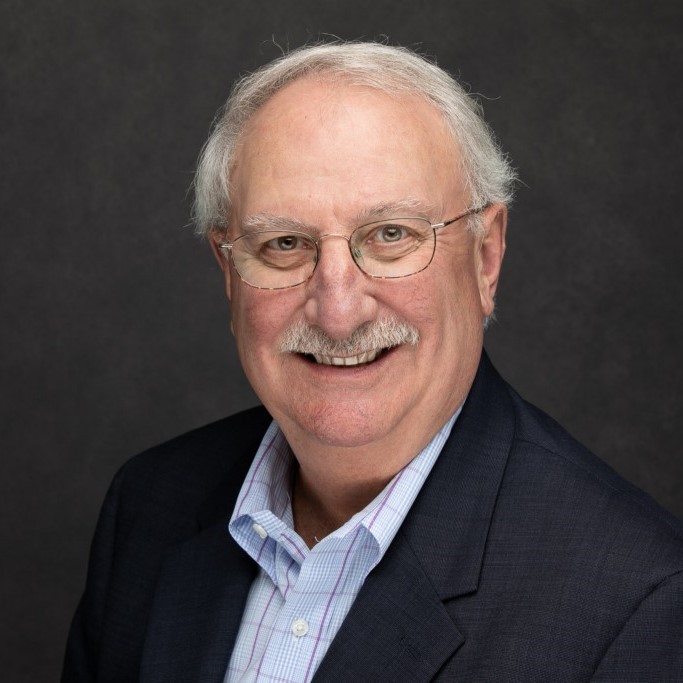
 Richard J. Sherman, Senior Fellow, Supply Chain Centre of Excellence, Tata Consulting Services
Richard J. Sherman
Tata Consulting Services
Lifetime Achievement Award
Rich Sherman is an internationally recognized author and thought leader on trends and issues across supply chain management. His book Supply Chain Transformation: Practical Roadmap for Best Practice Results (Wiley, 2012) has received praise by practitioners, academics and non-supply chain executives as a great read on business transformation. As a research director, he successfully launched the supply chain advisory services for AMR Research and led in the development of the SCOR® model, founding the Supply Chain Council, and serving on its Board. Mr. Sherman has served on the working committees for several industry initiatives including DAMA/Quick Response, Efficient Consumer Response (ECR), and VICS Collaborative Planning, Forecasting and Replenishment (CPFR). Mr. Sherman's client experience includes developing an Enterprise Information Architecture for Colgate-Palmolive, a Supply Chain Systems Architecture for Coors Brewing, and scores of supply chain operations and systems assessments and architectures.
Mr. Sherman has held senior management positions with visionary technology firms such as EXE, Syncra and Numetrix; and, market-leading corporations such as Microsoft, Information Resources (IRI), Mercer Management Consulting, Digital Equipment Corporation (DEC), and Unisys. He has contributed scores of articles and speaks frequently on supply chain trends and models. Rich received his BA and MA from Notre Dame.
What has motivated you to excel over the course of your career?
My main motivation has been advancing the profession and mentoring young professionals to join the profession to responsibly solve the most complex problems in bringing products to make the world a better place. When I joined the profession, it was called "physical distribution" and recognized by the market as "label lickers and dirty box movers"; collaborating with academics, consultants and practitioners, we transformed to "Integrated Logistics Management" and wore suits and ties. In the early nineties that transformation led to "end to end supply chain management" and the pandemic and global lockdown advanced the profession to household recognition status.
I have always envisioned a digital, collaborative, cognitive and agnostic supply network. My research is driven to achieve the vision. 40 years ago, I evangelized a supply network that could recognize a consumer's need and beam the product to satisfy the need. Theoretically, molecular decomposition, quantum teleportation and molecular re-composition is possible; however, it requires 3X the power of the sun to execute even the slightest movement on a single atom, so highly improbable. Quantum computing and fusion energy may address the problem; but, not in my lifetime. So, we must apply conventional and emerging technologies and innovate processes to overcome the compute power and energy hurdles. Thus, my journey continues.
What has been the biggest factor in your success so far?
Patient vision based on ecosystem thinking has enabled me to persevere the hurdles that come after the previous hurdles have been overcome. The journey is never-ending based on the improbability of an end solution.
What do you enjoy most about your career in the consulting industry?
Industry Week magazine, years ago, described me this way: "Visionaries come from a variety of molds. Some paint future scenarios by examining that which is technologically possible today and then projecting a world in which the possibilities have become reality. Others go a step beyond. Richard Sherman seems to fit both categories." My joy from being a consultant is bringing the future into the present. As a "visionary," I have had and have the opportunity to work with some of the brightest people in industries on identifying root causes and solutions to problems that most people place in the "unsolvable." I liken it to cold case detectives. Basing my thought processes on "ecosystem" thinking, most people miss the causes of unintentional outcomes. For example, I was once assigned to a project to create a returns processing system for a wholesale grocer. They were having problems with the volume of damaged good returns. What happened was that "just in time" was becoming fashionable and instead of one order a month, their customers were placing four orders a month. The unintended consequence of that "structural" change was that the night shift "pick, pack and ship" order fulfillment volume quadrupled resulting in associates literally throwing boxes onto trucks increasing the number of damaged goods. None of the executives noticed because they were in bed during the night shift. And, the journey continues.
What is your proudest achievement to date?
My proudest moment is twofold. Professionally, it has been watching the success of my associates and colleagues succeed based on my evangelizing nontraditional approaches to solving ecosystem supply network problems. Seeing my pragmatic interpretation of emerging, bleeding-edge technologies and future practice innovations evolve into best practices and process improvement is a continuous achievement.
That leads to my proudest professional achievement, the publication of my book. For years, people have approached me after a presentation to say that I should write a book. Being a visionary enables me to update the same conceptual slides for decades. Ecosystem supply network problems are not solved revolutionarily. The problems are most usually unintentional, and the solutions are evolutionary. For that reason, my presentations often could not be presented in the time allotted (despite the audience wishing we had more time) or I fire hosed the audience with information. The book presented the opportunity to present a complex problem and solution thoroughly at the reader's leisure. And, I am thrilled that 10+ years later, people are still asking for it.
What's the best advice you've ever been given?
If you want to change the results, you must change the structure. While in graduate school, I was introduced to the notion of "systems thinking" advanced by MIT professor, Jay Forrester in 1957. Later, while at DEC in the early 90s, I co-lead a team of operations engineers and field consultants that worked with MIT's Peter Senge and his firm Innovation Associates on applying systems thinking to supply chain process consultation. Every "people, process and technology" system is governed by its structure. It navigates the journey.
What does this recognition mean to you?
Being recognized by my associates for nomination means a lot to me. Honoring them by being rewarded for their recognition is an honor. At the end of the day however, if the recognition of my career contributions can lead to the opportunity to proselytize a new generation of supply network professionals to accelerate the journey, it would be joyous.
© Arc, All Rights Reserved. Request academic re-use from www.copyright.com. All other uses, submit a request to TMSalesOperations@arc-network.com. For more information visit Asset & Logo Licensing.