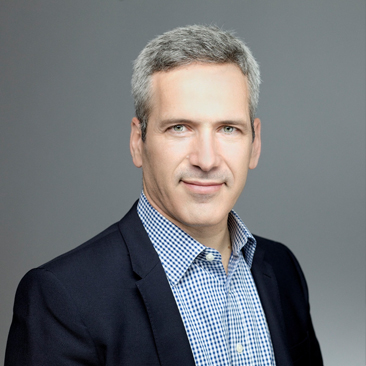
 Chicago-based West Monroe Partners has aggressive growth plans for its New York Office, which is currently at 125 employees but will be about 750 by the end of 2025, says Gil Mermelstein, a Senior Managing Director and a member of the firm's Executive Committee and Board of Directors and New York office lead. "As an epicenter for business, New York City is home to hundreds of enterprises that are staples in the U.S. economy, but most face issues of industry disruption, digital transformation, and talent management," Mermelstein says. To prepare for the hyper growth, the firm just signed a ten-year lease at Worldwide Plaza at 825 Eighth Avenue in Manhattan. Mermelstein sat down with Consulting to discuss the firm's planned growth.
Consulting: Can you take me through a little bit about how you landed as WMP's New York office lead?
Mermelstein: I was employee No. 1 in the New York office when I joined the firm at the end of 2010. I was a Partner in London with BearingPoint, which is a strategic partner with West Monroe. When I was there we took BearingPoint Europe private and ended up with an alliance with West Monroe in North America and that's how I got to know Kevin McCarty and Dean Fischer and everyone at West Monroe. There was an opportunity for me to come back to the U.S. and start an East Coast practice for a small firm—I think West Monroe was about 200 people mostly in Chicago at that time. Fast forward to today and we are now about 125 people in New York—all organic growth, we haven't done any acquisitions in New York—focusing on Financial Services, Private Equity, M&A, Energy, Utilities and Healthcare. Over the years as we've added practices we've started to look more like the broader West Monroe. We've experienced very robust growth and I think our story resonates really well on the East Coast. It's a huge market and we still have a very low market share. So, that's where we are today.
Consulting: Let's talk about talent. The plan is to grow from the current 125 to 750. Are you envisioning that as linear growth? And is that all organic growth?
Mermelstein: At West Monroe, we're generally very collaborative across offices and we are net importers of other West Monroe talent into the New York area. Most of work is focused in the New York metro, up to Boston, down to Washington DC, but the tri-state area—New York, New Jersey and Connecticut—is where we are doing the majority of our work right now, but we're looking to expand that. It's very hard to grow if you can't find and don't bring in the people. Our goal is to grow it by about 50 percent a year, and often at West Monroe, we end up surpassing our goals. And fortunately, at West Monroe we have built a very robust talent acquisition team. It's a big focus for us everywhere, but obviously, it's biggest in New York. And I wouldn't be surprised if we did some acquisitions along the way. We haven't done any in New York but that's not for a lack of looking. If I had to guess, I'd say our growth would probably be two-thirds organic and one-third acquisition, or close to that.
Consulting: Do you envision an acquisition being sooner or later in the process?
Mermelstein: Well, the 2020 plan is set and we think we can get there organically, but if an opportunity comes up we'll do it on top of our organic growth, of course. We are cash rich and sitting on capital so if a good acquisition opportunity comes along, we'll definitely look at it. It really depends on the market and what's out there.
Consulting: West Monroe has always been a firm that has prided itself on its unique and strong culture. How would an acquisition or all this growth impact West Monroe's culture?
Mermelstein: My guess is any acquisition we'd look at would be less than 50 people and I think we could absorb that culturally. Look, the firm would obviously have to share our cultural values and principles.
Consulting: Let's talk about the organic growth. Where does that come from?
Mermelstein: We're definitely active on campuses for both undergrad and business school. It's probably going to be a little less than the firm average because given the nature of our work we'll probably be looking a little more for experienced hires, which will come from a combination of industry hires and other consulting firms, both Big 4 and more boutique firms. I would guess we're looking at about three-quarters of our new hires being experienced hires while about a quarter would be from campus.
Consulting: You've mentioned doubling the business each year. How attainable do you think that growth is in terms of revenue going forward?
Mermelstein: Last year we grew close to 100 percent in New York, so we doubled the business in 2019. I don't see us doubling the business every year, but the plan calls for about 50 percent growth each year for the next five years, and I do think that's realistic.
Consulting: When you look at the industry sector landscape, where do you see the most opportunities?
Mermelstein: We are highly diversified so the growth could really come from all over. But if you look at the PE market, for instance, if you look at the dry powder and the amount of capital firms are sitting on and it's still an asset class that people are gravitating to and rightly so. We have tremendous opportunity there. We are dominating on the diligence side and have a lot of opportunity on the portfolio side. We haven't really touched much of the strategic M&A. Then look at banking. We have only touched a small portion of the market. Key accounts will drive some of this growth but so will new business and new market share. In New York, I would say about 30 percent of our revenue is from key accounts. The firm is much higher than that so we can certainly grow the business through our key accounts. We can also add new practices, which I'm sure we will. Healthcare in New York has been more focused on the payer side and insurance but that could be an area. Healthcare is a market that I don't see slowing down anytime soon; providers and payers coming together, value-based legislation, there's so much there. Also, Life Sciences is huge on the East Coast and we just started going after that more aggressively. I think the highest growth area will probably be healthcare, followed by the PE space and then banking, financial services and utilities. I think all of them will grow significantly but if I had to rank them, that's how I would do it. There are lots of growth levers. Which is why I'm pretty confident about our forecasts and plans.
© Arc, All Rights Reserved. Request academic re-use from www.copyright.com. All other uses, submit a request to TMSalesOperations@arc-network.com. For more information visit Asset & Logo Licensing.