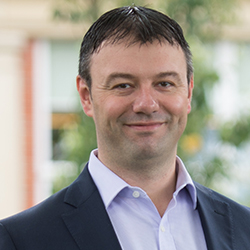
 L.E.K. Consulting completed a pro bono strategy project on behalf of Boston's Boch Center to help the nonprofit performing arts organization. The center is home to theater, classical and popular music, opera, musicals, dance and other performing arts. It also runs numerous education and community outreach initiatives and collaborations designed to inspire appreciation for art, culture and creativity. The Boch Center is located in Boston's theater district, about a mile from L.E.K.'s Boston headquarters. The firm brought to bear its expertise in strategy and entertainment to help create a roadmap for the Boch Center to expand its connection with millennial and younger audiences and philanthropists, says L.E.K. Managing Director and Boston office head Rob Haslehurst, a consumer-sector Partner at L.E.K. who co-led the project, which took place earlier this year. Consulting caught up with Haslehurst to discuss the project.
Consulting: Can you tell me a little bit about how this pro bono project came to be?
Haslehurst: L.E.K. does about four pro bono projects a year because we like to work on meaningful projects, in the cities where are offices are located. In this case, there's a member of our staff on the business development scene and before business school he had a role in the Boston arts scene and he was part of the Metropolitans Program at the Boch Center, which is essentially their young professionals program. When he spoke to the leadership team there he was aware that they could use some help around how they interacted and connected with younger members of the Arts community. We had some internal discussions about it and reached out to the center and had some conversations about it and eventually worked with them to develop the scope of the project and what we could bring to the Boch Center.
Consulting: Is this a big issue—millennials and their financial support of the arts community or is it just getting the venue up to speed with new technologies?
Haslehurst: It's a little bit of both. The vast majority of its database was older and while it had younger people coming to its events they were not really engaging with the organization as a nonprofit but more as just a theater. Also, some of the data we've seen—and I'm going to paint the millennial generation with a broad brush—say live events and unique activities are an important cultural hook for that generation. So, that bodes well. Millennials are philanthropic, but often times it's lower dollar values or less consistent giving than older generations. Plus, with new technologies traditional giving pipelines typically do not work with this generation, so that was something for us to consider, as well.
Consulting: Were there very specific goals in terms of measurable and project deliverables or was the project more general in focus around engagement with this particular demographic?
Haslehurst: Our project was pretty broad around developing a recommendation as opposed to de-livering a specific result. As part of the work we did, we identified that this one program isn't the be-all and end-all for reaching millennials and I think we helped them think through what they should be focused on as they moved forward.
Consulting: Can you tell me a little bit about the size and scope of the project in terms of resources?
Haslehurst: The core work was done over about a six-week period with what we would consider as a standard case team. We plugged in and treated the Boch center as if it were a paying client, as we do with all our Pro Bono. It's a reasonably substantial investment when you measure billable hours, etc. The clients, of course, appreciate that they are getting top-tiered service. And we also do that for or employees; these Pro Bono projects are important and we need to approach them as we would any other project. Overall, a project like this is a several-hundred-thousand dollar investment by the firm.
Consulting: What were the takeaways from the project?
Haslehurst: There were a few key takeaways for them, I think. One was the understanding of the breakdown of the people and their nonprofit mission and how that could be improved with just some best practices and enhanced communication tools and technologies. For instance, educating the audience about the nonprofit status and the difference between just buying a ticket to a show as compared to supporting the center in other ways. The other realization for them, I think, was how narrow a scope they were looking at by focusing on just millennials. In reality, the market they were going after was intergenerational; it was much bigger than just millennials. I think how they ended up thinking about the group was also eye opening for them.
Consulting: What capabilities do you think L.E.K. brought to the table and why do you think it was such a good fit for the Boch Center?
Haslehurst: I think it's a combination of both the underlying capabilities to bring together the voice of the consumer, data from various research and reports, as well as just having a third party come and take a look at the problem from a big-picture perspective was very helpful to them. We also have a very strong Media and Entertainment practice, which I'm a part of, and I think that was very beneficial to them. We think a lot about this space, audiences, live events, entertainment, communication etc. Plus, we've also done a lot of work in the non-profit space so we get them and have a good understanding of nonprofits and fundraising and all the challenges that go along with that. So, to be able to bring all that together with our team of talented individuals was one of the biggest reasons it was ultimately successful.
Consulting: How do you go about staffing up one of these projects? Is it strictly capabilities based or does it depend on someone's passion about the project?
Haslehurst: We treat it as any of our other projects in that we're not going to pull people off another project for a Pro Bono project but at the same time, if we have a few weeks to pull together the right team—as we did with this one—than we definitely assemble the team with both capabilities and passion in mind. Doing a Pro Bono project is a little different than working on a paying client so we're also mindful of that. Some folks view these projects as fun and rewarding work, which it is, of course.
Consulting: Why is this type of work so important?
Haslehurst: We think it's important that the best practices that we develop for the private sector also make their way into the nonprofit sector, as well. In that sense, we act as a liaison between the two sectors and that's important. Also, L.E.K. is very serious about giving back and making an impact in the communities where we work and we see this type of project—the opportunity to work with a nonprofit in the Arts community—as an example of how the firm lives out those values we all believe in. And we were happy to be able to bring that to our team.
© Arc, All Rights Reserved. Request academic re-use from www.copyright.com. All other uses, submit a request to TMSalesOperations@arc-network.com. For more information visit Asset & Logo Licensing.