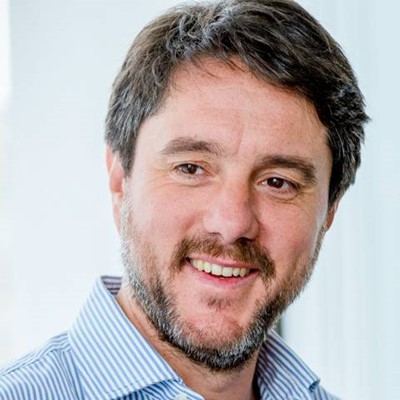
 It's boom time for the Technology, Media and Telecom (TMT) consulting market, and the continued acceleration of technology continues to be a moving target some organizations struggle to consistently hit. Companies are best suited looking at change as a continuous process that happens incrementally, says AlixPartners' TMT practice lead Francesco Barosi. Consulting caught up with Barosi to talk about how TMT consultants are helping technology, media and telecom companies keep pace and find success in this rapidly changing world.
Consulting: What do you see as the overall state of the TMT consulting market?
Barosi: TMT is a market that is exploding because of the pressure and opportunities the companies in these segments and industries have. So it's a market, from a consulting services standpoint, that has incredible demand and that continues to grow at a very high pace. The class of situations that are manifesting have to do with mergers, with industry-shaping transformations, with evaluating transactions. So they're very diverse and pretty exciting to be a part of.
Consulting: What are clients in the space struggling with most?
Barosi: The pace. There's so much speed and motion that we were used to cycles happening over multiple years, now they happen in quarters, soon they'll be happening in months. So keeping pace with the need for change and ultimately making sure they interpret the type of change or the transformations they're making less from an event-based effort and more from a continuous improvement standpoint. Not everyone has gotten to that conclusion. Many say they have it embedded in their culture, but I'd challenge whether that's real.
Consulting: What's the key to effectively instituting change on this level?
Barosi: The key first of all is to acknowledge it happens in steps. It doesn't happen in a single event during a single effort. The key is to acknowledge that it's a mindset and a culture, and to actually combine and triage three dimensions of change, the financial dimension, the organizational dimension and ultimately and most importantly, the operational dimension. If you don't combine these three, you're kind of limping. You'll ultimately be doing something that doesn't create sustainability. So the way I'd depict it is that it's a line that doesn't have a lot of jigsaws, it's much more stable, much more smooth, and goes from A to B with a certain trajectory and slope. The other one, it's a lot about jigsaws. Maybe at some point you have a lot of sugar and you feel like you've done a lot, but then there's a quick fall when that sugar high goes away. So a journey from A to B becomes much more stressful and risky.
Consulting: What are some of the biggest risks around digital transformations?
Barosi: First of all, engagement with your employees with your leadership, loss of morale and loss of talent. The risk is communicating to investors, to certain shareholders or stakeholders and setting a tone you then can't maintain and it becomes just window dressing. Ultimately the risk is extinction. Complacency is another big element. So the risk is if you don't look at it systemically, and ultimately you do it on an event basis and you jeopardize the going concern and the continuity of the enterprise. Every company should take the term "digital transformation" and essentially articulate and unbundle it into its components and what they mean for a media company, what they mean for a technology or software company, and so on. I'm saying let's take it to the next level, but make it realistic and real, and let's articulate what the operational dimensions are versus what I typically see, which is that it substitutes human labor hence it's a great opportunity for cost reduction.
Consulting: What are some of the big consulting opportunities around TMT?
Barosi: We build capabilities for our clients, make sure we're not creating addiction, making sure we build sustainability for them, and having a relationship based on value versus posturing and PowerPoint documents. Value means that you take a suggestion, you take a recommendation, you take analytics, you take a full suite of abilities to assess and define, then help and support an implementation. That's a skillset that's more and more important because as we talked about the cycle times are becoming less and less and these companies don't have the talent, the fortitude or the abilities to take a recommendation and go do it by themselves, it would take 2 to 3 times as much. So if you have experts that can do that, that means success for an outcome and an output rather than success as a "ok, great idea, now what do I do with it?"
Consulting: What's the future of the TMT practice at AlixPartners?
Barosi: It's going to continue to grow at unseen rates (40%+ per year in terms of revenue) and we're going to continue to morph into doing more insight-based type consulting and ultimately continue to use our skillset to build proprietary tools that are going to be game-changing for us as a practice to do our work. That way we can spend more time on the quality of the work and on the insights we're coming up with rather than time on analyzing and doing the basics. Less documents, more concise analytics, an output which is so much more repeatable versus something that's always tied to the individual that's different with each engagement.
© Arc, All Rights Reserved. Request academic re-use from www.copyright.com. All other uses, submit a request to TMSalesOperations@arc-network.com. For more information visit Asset & Logo Licensing.