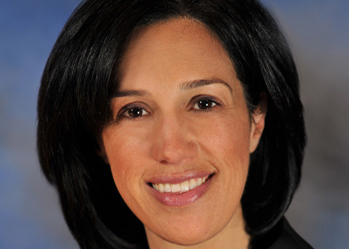
 The workforce is changing rapidly. Not just how work gets done, but the kinds of workers and talent being sought after to accomplish specific business tasks. This is a sea change the likes of which the business world has never seen before, and companies are scrambling to figure out how to adapt. Deloitte's recently released 2018 Global Human Capital Trends Report revealed a labor market tighter than it's been in nearly two decades, which is forcing companies, and senior leadership, to shift their thinking on hiring. Consulting caught up with Erica Volini, Deloitte's U.S. Human Capital Leader, to discuss some of these trends, and of course, to delve into the massive consulting opportunities they present.
Consulting: Why is the labor market so tight right now?
Volini: The jobs report would show there's a high degree of job growth happening right now, which is great. I think that's certainly the biggest driver of the tight labor market. I think the other factor is that people are choosing to work in different ways. It's what we call in the Trends Report "the workforce ecosystem." The idea that you have all different types of workers now, full-time employees, gig workers, whether they're freelance or contractors or individuals in the cloud, so it's not as simple to have a job and find a person who wants to work full time in that job. The biggest growth in the job market we're seeing is actually in freelancers. So you have more job creation than you've ever had before, and are having people choosing to work in alternative ways that aren't necessarily full time, both factors are contributing to where we are right now.
Consulting: How are companies compensating to adapt to those labor market realities?
Volini: Companies right now are getting very focused on identifying the type of work they need in order to get a piece of work done. It's about segmenting the work to understand what's the best way to get these activities done versus thinking "I have an open position I need to fill with a single person." I think it's a very different approach, instead of thinking about the job holistically, it's about breaking down the segments of work and thinking about how you can source talent or source capabilities to go execute that work. Those capabilities might be in the form of automation (robotics, cognitive, or AI), it might be in the form of alternate talent models like freelancers or looking in the cloud. The companies that are going to thrive in this tight talent market are the ones that are broadening their approach in terms of how the work can get done. I think the companies that are falling short are the companies that continue to look at a traditional talent model because that's where the shortage is actually occurring. That to me is the biggest difference, and it's a significant mental shift for organizations. It changes the way you're actually looking at talent. We're even shifting even our language. If you think about the old attract-develop-retain model, that language was all about attracting talent. Our view is now that it's not about attracting talent, it's about accessing capabilities and understanding what capabilities you need.
Consulting: What are the big consulting opportunities you're seeing around this changing fundamental understanding of what workplaces are becoming?
Volini: The biggest opportunity for us is to help companies reimagine the way in which work gets done. That's the starting point for everything right now. It's not process re-engineering, it's not just thinking "if I put a roadmap here I think I can get some efficiency, if I put some cognitive here I think I can get some more data." It's literally taking a step back and asking what are the outcomes I'm trying to drive and what is the best way to reconfigure this work in order to get to those outcomes. Once you have that and you understand the way in which work should get done, that needs to be the predecessor to then thinking about the capabilities you need to execute that work. But it doesn't end there. Once you identify what those capabilities are, then you have to think about how to get those capabilities, and how to actually procure them. Is it building new technologies? Acquiring new technologies? Going to contractors? Hiring people? Then you have to think about if you've fundamentally changed the composition of your workforce, what else needs to change? Does the structure of your organization need to change? Does your performance management process need to change? Does the way in which you reward people need to change? How are you going to build new capabilities in terms of learning and how do you create those kinds of experiences? I think the next frontier for consulting in the human capital area is about understanding that in order to capitalize on all these technology advancements that are going on and in order to thrive in this tight labor market you need to change the way work is getting done and as a result you're pulling a thread that's going to force you to transform every aspect of your workforce and your workplace. You're transforming holistically and I honestly can't remember that degree of change being out there. I think this is one of the most significant opportunities we've seen in the consulting space in a long time. We're changing the core of how organizations do their work.
Consulting: The report highlighted business's expanding role as a social enterprise? What are the driving forces behind that?
Volini: There are three driving forces. The first is the rise of the power of the individual. We see the individual, in particular the millennials, having a bigger voice than they've ever had before. They're much more deliberate about what they want organizations to do and what role they want them to play. Not only do they have that voice, but because of all the technology out there they have a platform for their voice to be heard and heard loudly. The second trend we're seeing is the trust in government is declining and declining rapidly. The Edelman Trust Index came out and showed that trust in government is 10 percentage points lower than trust in business. So it's creating a gap on major societal issues that has to be filled. If people don't trust government, the question becomes who's going to fill that gap? The corporations, organizations and business are a logical place to go because they have the resources, the money and the influence to be able to solve some of those issues. The third major driver we're seeing is the increase in technology but also the fact that people are starting to see that while technology does a lot of good, it can also have a number of adverse impacts if not managed appropriately and there's a call on organizations in playing a bigger role to help mitigate the downsides.
© Arc, All Rights Reserved. Request academic re-use from www.copyright.com. All other uses, submit a request to TMSalesOperations@arc-network.com. For more information visit Asset & Logo Licensing.