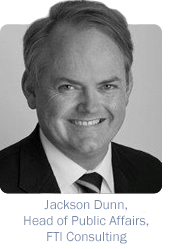
 As the regulatory climate in Washington becomes more stringent, actions taken by lawmakers can now more than ever have far-reaching consequences on businesses' future plans. Accessing those lawmakers and their staff is becoming ever more important for firms working within the public sector or other highly-regulated industries. The key to that access in many cases is lobbying. Sensing the increased need for experts to navigate the regulatory and legislative minefields, FTI Consulting has acquired C2 Group, a bipartisan government relations lobbying firm, to help clients gain insight into the motivations of policy elites. Jackson Dunn, FTI's head of public affairs, expects more firms to offer lobbying services down the line.
Consulting: Was the acquisition a play for FTI to get a toe hold in lobbying or for C2 to get into consulting?
Dunn: I think both FTI and C2 can sort of see where the future of this industry is going. We work with companies going through a moment of change in their business plan. It could be an investigation, it could be litigation they didn't expect, an acquisition, regulatory issues—you name it. That's when FTI is usually called in. Sometimes those issues cross and align where Washington gets involved. What we've done in public affairs in the past few years is work with our clients, mostly C-suite and boards of directors, who are coming to this understanding that activity in Washington can have a disproportionate impact on their business planning. What is congress looking at that might muddy the waters on an acquisition?
What are the regulatory issues on the plate that might impact the value of the acquisition or might change some of the key stakeholders in the investment community. Understanding what's happening in Washington, understanding what the political and policy elite are thinking is some of the service we've been providing these clients at FTI. Terrific insights can be gained through the ability to do lobbying.
At some point having a direct conversation with a member of congress' staff, a staffer in the administration or a member themselves is a great way to understand their thinking about a particular issue and help us educate them on some of the unintended consequences or the consequences of the policy they're thinking about. Lobbying is very regulated and restricted, so we did not have that capability at FTI. We've done I think a very good job with our clients helping them identify stakeholders and help inform and shape the public dialog. But without this lobbying component C2 brings, we weren't really providing a holistic approach to public affairs. This addition of C2 completes that offering for us.
Consulting: What's behind the timing of the acquisition?
Dunn: We've known we were interested in the space for some time. I think what was driving it was that C2 was exactly the kind of firm we were looking for. They're very well respected in town, they have great relationships with not only electeds and appointeds but also with the politicos in this city. They have specialty in things that are important to our clients—tax, corporate governance issues, as well as this great industry expertise which matched and aligned with ours, energy, financial services, and healthcare.
Consulting: How will the acquisition enhance FTI's offerings?
Dunn: It goes back to this idea that the C-suites and boards of directors are looking at Washington in a way they didn't 20 years ago. Back then you looked at Washington and with an immediate problem hired a lobbyist to fix that problem. I think today people see it much more broadly. There's so much more transparency in Washington now. What companies are looking to do is to engage the policy and political elites in multiple communication channels. But we were missing the ability to set up a direct meeting with a member of congress or a member of the administration. That's a critical piece of the puzzle that we filled in.
Consulting: Is lobbying something more consulting firms are going to be doing more in the future?
Dunn: I think they should be. I know that's the choice we've made. It goes back to this idea that when you're determining business strategy there are a number of factors you're taking into account. One of the growing areas of importance is public policy and how that's going to shape the environment you're trying to conduct business in and be able to anticipate the way Washington is going to come down on certain issues and to recognize when these moments of change are coming and then be able to capitalize on these moments by bringing your expertise, your experience, your point of view to shape and form political and policy elites' opinions.
When we go and help our clients mitigate any sort of issues they're having we see Washington as a place that needed to be paid attention to and that our clients understand the different forces shaping strategy here. Many of our clients already understand this and that's why they come to FTI, but I think you're going to see other consulting companies start to take a look at these practices and how they can apply to their clients.
© Arc, All Rights Reserved. Request academic re-use from www.copyright.com. All other uses, submit a request to TMSalesOperations@arc-network.com. For more information visit Asset & Logo Licensing.