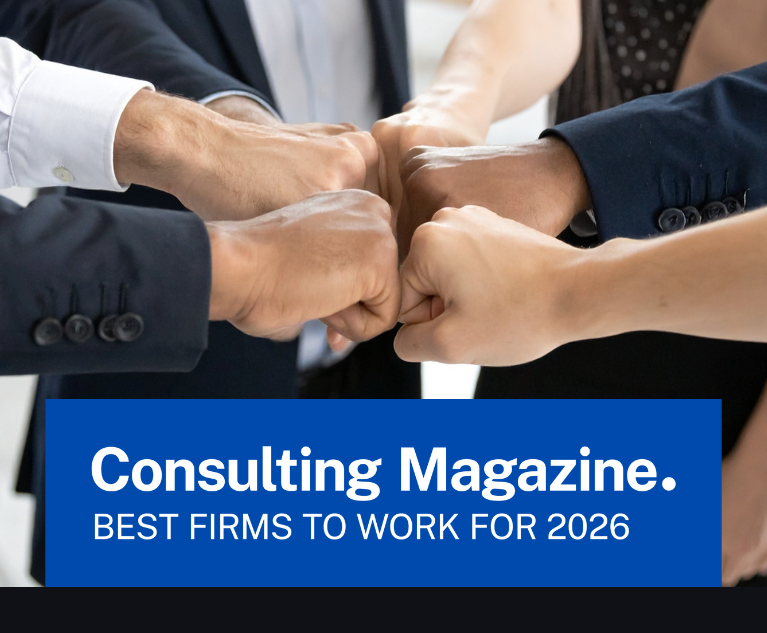
 The concluding article of Consulting Magazine's three-part series exploring the realities, challenges, and structural commitments required to build a "Best Firm to Work For."
Editor's Note: This article concludes our three-part series exploring the realities, challenges, and structural commitments required to build a "Best Firm to Work For." Over the past few weeks, we have examined the foundational elements of firm culture and the courage it takes to truly listen to your workforce. In our final installment, we look at the compounding value of consistency. Participating in this annual program is far more than a bid for a trophy—it is a critical, unfiltered feedback loop that holds leadership accountable to the people they lead. As our June 4 survey deadline approaches, we invite you to see how sustained participation has sharpened some of the profession's top firms. Then, we challenge you to step up and measure your own…it's not too late.
Four years. Seven years. Thirteen years. The firms in this final installment of the Best Firms to Work For series haven't just been recognized—they've been consistent. A credential is something you earn and carry forward. A commitment is something you renew. What these firms have learned across years of sustained participation is what every firm in the profession needs to hear before June 4.
The hardest thing about building a great culture isn't the initial investment. It's the ongoing one. Any firm can have a good year. Any firm can generate a strong employee survey response when morale is high, the economy is favorable and attrition is low. The test of genuine cultural commitment isn't what a firm does in its best year. It's what it does in every year, including the difficult ones.

The three firms in this installment represent four, seven and thirteen consecutive years of participation in Consulting Magazine's Best Firms to Work For program. They span the small, midsize and large firm categories. They have navigated acquisitions, market shifts, leadership transitions and the relentless evolution of employee expectations. And they have kept entering. Not because they had to. Because they understood something about what this program actually measures—and what sitting it out would cost them.
The Feedback Loop That Never Closes
Of all the arguments for sustained participation in this program, Bill Gallagher's is the most direct. Gallagher, CEO of SEI has led his firm to thirteen consecutive years on the Best Firms to Work For list, including two No. 1 finishes. He has no patience for the idea that a firm which has earned the distinction can afford to step away from the process that produced it.

"If you care about building a great place to work, you don't take a year off from listening," Gallagher points out. "This isn't about the badge. It's about the feedback loop. The market changes, your people change, expectations change. Staying in it keeps you honest and keeps you improving. The moment you think you've got it figured out is usually when you start falling behind."
That last sentence carries the weight of experience. The Best Firms to Work For program's own history bears it out. Firms that dominated the rankings for a decade eventually fell off the list. Not because they stopped caring about culture, but because culture is not something that sustains itself without measurement, attention and a willingness to hear uncomfortable things. Gallagher has built a firm that understands this at an institutional level.
The data his firm receives each year isn't filed away. It informs decisions. It surfaces inconsistencies. It holds leadership accountable to the standard the firm publicly claims to maintain. Thirteen years of that discipline produces something no single recognition can: an organization that has practiced the habit of honest self-assessment long enough that it has become part of how the firm operates.
Seven Years of Showing Up
Jay Laabs, CEO of Spaulding Ridge, entered the program for a different reason than most—and has stayed for the same reason he started.

"We have always viewed this recognition from Consulting Magazine as an important validation point, particularly when it comes to recruiting," stated Laabs. "Being recognized carries a level of credibility that resonates with both candidates and clients. Participating in the program also helps level the playing field with larger firms, such as the Big Four, which often benefit from longstanding brand recognition. As a modern firm like Spaulding Ridge, we don't have that same legacy advantage, so having our name featured alongside theirs in a respected industry publication is especially valuable."
What Laabs describes is a compounding effect. The first year of recognition earns a firm a presence on the list. The second year begins to build familiarity. By year seven, the recognition has become part of how experienced professionals in the consulting market understand Spaulding Ridge – not as a newcomer making claims about its culture, but as a firm with a multi-year record of having those claims validated by its own people.
That distinction matters in recruiting. It matters in client development. And it matters internally – because employees who see their firm commit to this program year after year understand that the investment in culture is not performative. It is structural.
Four Years Through Change
Joseph Brownell, Global Head of Marketing at Grant Thornton Stax, has tracked the program's value across a period that would have tested any firm's cultural continuity. Stax was acquired by Grant Thornton in 2024, a significant organizational transition that might have prompted many firms to pause their participation while the integration settled. Grant Thornton Stax did not pause. Four consecutive years on the honoree list, including a No. 2 small firm finish in 2025, across a period that included a major acquisition. That record is itself a cultural statement.

"I would strongly encourage firms to reenter," emphasized Brownell. "The program offers much more than a trophy, it provides a real opportunity to listen to your people and to track your culture as time moves forward, adjusting with clear insight from year to year." Workplaces keep shifting fast, and employee expectations evolve with them. Returning to the program equips firms with sharp insight into what works, where gaps remain, and how staff feel about the organization today."
That phrase, how staff feel about the organization today, is the operative word. Not last year. Not at the time of the last all-hands meeting. Not according to the exit interview data from the previous quarter. Today. The program forces a current reading, and for firms navigating change, that current reading is not a luxury. It is a necessity.
What Consistent Participation Signals
There is a particular discipline required to keep entering this program year after year. It would be easy, after earning recognition, to treat the distinction as settled—to assume the culture that earned the honor is the same culture that exists today. The firms in this installment understand something different: that culture is not static, that employee expectations evolve, and that the only way to know where you stand is to keep asking.
What they have built over four, seven and thirteen years of consecutive participation isn't just a list of honors. It is a longitudinal record of organizational self-awareness. And that, more than any single ranking, is what genuine cultural commitment looks like.
Michael Webb, Editor-in-Chief, Consulting Magazine notes, "There is something worth saying about the firms that keep coming back to this program. It would be easy, after earning recognition, to treat the work as done, to assume the culture that earned the honor is the same culture that exists today. The firms that have been doing this for four, seven and thirteen years understand something different. Culture is not a credential you earn once. It is a condition you maintain, measure and improve, and the only way to know whether you're succeeding is to keep asking the people who experience it every day. That is what this program makes possible. That is why it matters."
Gallagher reiterated Webb's comment, "We entered the Best Firms to Work For program because we wanted a clear, unfiltered view of our culture, and what we didn't expect was how much sharper it made us as a leadership team."
THE DEADLINE IS JUNE 4.
The 2026 Best Firms to Work For survey closes June 4, 2026. The survey covers six short sections completed by your own consulting professionals. Every qualifying firm receives a benchmarking report across all six categories, benchmarked against the full field. Honorees are recognized at an in-person awards event and featured editorially in Consulting Magazine.
Begin the survey here. Your people are ready to be heard. The question, as it has always been, is whether you're ready to listen.
We challenge every firm in the profession to prove it. The window is almost closed. Its time to prove it.
Consulting Magazine is published by Arc Network and is the leading editorial resource for the management consulting profession. The Best Firms to Work For program has recognized excellence in consulting workplace culture since 2001.
© Arc, All Rights Reserved. Request academic re-use from www.copyright.com. All other uses, submit a request to TMSalesOperations@arc-network.com. For more information visit Asset & Logo Licensing.