The events of last year caught much of the global business world off-guard, but while 2020 was a year 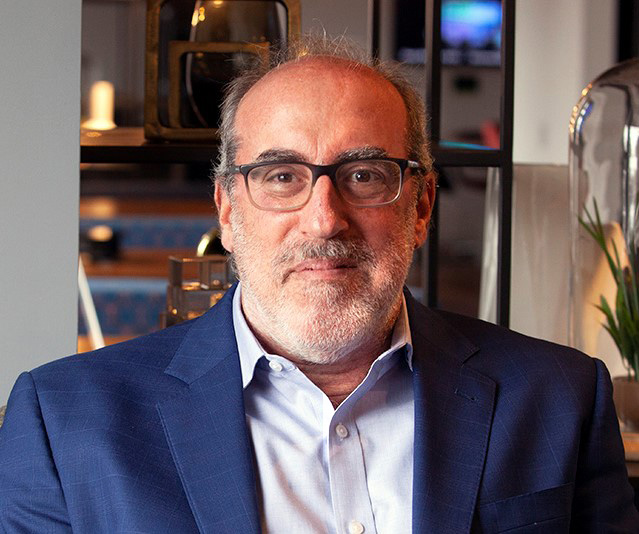 of responding to the crisis, 2021 (and beyond) are poised to be focused on recovery and transformation. A reimagination of work, as founding partner of Deloitte Consulting's Future of Work practice Jeff Schwartz called it in a recent conversation with Consulting. We recently sat down with Schwartz to discuss how the pandemic has changed everything we thought we knew about the world of work, and how companies are pivoting to thrive in that new world.
Consulting: What are some of the most important things companies can do to prepare their workforce for the New Normal we find ourselves in?
Schwartz: We've been moving through COVID and 2020, going through some version of what we at Deloitte call the respond-recover-thrive progression through a crisis. We're still in the extended recovery, it's taken longer than almost any of us thought, but now we're pivoting to what we call the thrive phase. I think the challenge for us as business leaders and consultants is to be thinking about where we want to be at the end of 2021. This is a reimagination moment. We call it rearchitecting work because it's not just an imagination exercise, we need to build something new. We need to reimagine it. And I think the challenge is to sort of strike the balance between recovery and survival and thrive and leaning forward right now. And to push ourselves because we now live in an exponential world. Everything we did in the last decade we need to do in the next five years.
Consulting: How did that push for for reimagination and rearchitecting play out in Deloitte's recent 2021 Human Capital Trends report?
Schwartz: We asked 3,600 senior executives from 99 countries what was their view of transformation work both pre- and post-COVID. Pre-COVID, 29% of these 3,600 executives said they were reimagining work. Post-COVID, 61% said that they are going to shift from an optimization mindset to a reimagination mindset. That's the challenge that we have. We need to get through the extended recovery, but we need to shift into this reimagination rearchitecture mindset.
Consulting: What do you see as some of the big consulting opportunities in play right now that weren't even necessarily on anyone's radar this time last year?
Schwartz: It's a very opportunity rich environment for our clients because several things are happening at the same time. There's a significant opportunity to accelerate strategic thinking and strategic initiatives, and when companies do that, that's good for consultants. A big part of this will continue to be technology. Cloud computing has been accelerated, obviously, by what we've seen happen with COVID, automation and AI as well. But I think we're also seeing a tremendous interest in the cost strategy across cloud, across AI and robotics, and across the enterprise systems that come across them. Companies are going to be looking at a lot of changes, very fast. I think there's going be a big focus in the next year or two on not just coming up with leaning-forward strategies, but on how do we execute much faster.
Consulting: The pandemic fundamentally changed everything we thought we knew about the world of work. Which of those changes do you find companies are struggling the most with adapting?
Schwartz: I think the biggest challenge right now is that we've gone from an acceleration mode to a disruption mode. It is not easy to change as quickly as we had to change in 2020. I think there are two really big sticking points. One is that so much of what we have learned as managers and business leaders and consultants is very heavily rooted in 20th century management. It's the mechanization of work, it's workflow and process optimization and automation, and we we've been riding that wave for a very long time. So I think one of the challenges is moving from sort of the process optimization mindset to the project team innovation mindset of the 21st century. The older generations of workers are really anchored in this workflow optimization perspective, whereas I think the younger generations across pretty much all sectors are very much are more comfortable and are leaning into these 21st century models.
Consulting: What are some of the biggest lessons to be learned from last year and how do you see those lessons being applied moving forward?
Schwartz: We learned that we are more resilient as individuals, organizations, and society than we thought, both in terms of our ability to bounce back, but also in terms of how do we build resilience into our organization. We are also much more adaptable than we thought. One way to think about this, in 2020, in a way we threw away our job descriptions, because it didn't matter what we hired you to do. And it didn't matter what jobs you had done for us before. What mattered was what you could do, and what the market required us to do. Automotive companies making ventilators is an example of this. Lastly is our ability to innovate. In less than a year, the life sciences industry around the world created vaccines for a virus that we didn't even know existed at the end of 2019. So, going forward, how do we capitalize on this resilience, this adaptability, this innovation? These are the really critical things for the imagination economy for the re-architecting of work.
© Arc, All Rights Reserved. Request academic re-use from www.copyright.com. All other uses, submit a request to TMSalesOperations@arc-network.com. For more information visit Asset & Logo Licensing.