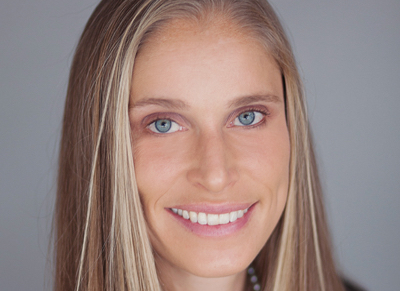
 Bain & Company's Brenda Rainey was recently promoted to Senior Director of the firm's global Private Equity practice where she advises private equity firms and institutional investors and manages a global team to execute on strategic planning, budgeting, financial tracking and reporting and knowledge management. Rainey says Bain's Private Equity practice has grown eightfold over the past 15 years and represents about a quarter of the firm's global business. Bain maintains a global network of about 1,300 PE professionals serving clients. In addition, Rainey has led the development of Bain's annual Global Private Equity Report, the most widely read and cited report covering the private equity industry. Consulting caught up Rainey to discuss the practice, her new role and the overall market.
Consulting: Can you tell me a little bit about Bain's Private Equity practice?
Rainey: Bain is the leading consulting firm serving private equity firms and institutional investors active in the space. Bain provides the full range of services across the investment value chain and that starts with deal generation and screening through to due diligence all the way through to exit planning. The other part of what we do is we help PE firms and institutional investors develop their own strategy for successful investing. We tend to think about PE firms as deal makers, and they are very focused on the businesses they are investing in, but you could step back and think about the private equity firm as a business itself that needs its own strategy for success. We will do a whole range of topics with PE firms—everything from helping them define their investments, developing sector strategy, adjacency expansion, fundraising strategies, organizational design and decision-making. There's really a whole host of challenges that private equity firms are facing themselves.
Consulting: Can you give me some insight into your new role as Senior Director?
Rainey: A large part of my role is staying on top of the latest trends that are shaping the PE industry. We do publish our annual Global Private Equity Report and I've been a part of that since it started 10 years ago. My role is to always have a ready, fact-based, informed view of what's happening in the industry and that's what puts Bain in the best position to serve our clients. And then there's also the evolution of our own Private Equity consulting services and the way we work with our clients to match their changing needs. Really, it comes down to understanding the changing dynamics of the industry. Meanwhile, the other part of my role is to support the running of Bain's private equity business, so it's everything form strategic planning to financial tracking and reporting to marketing to anything that needs to happen to keep the business running.
Consulting: What are some of your immediate goals?
Rainey: We've had a really good run; the business has grown eight-fold in terms of revenue and clearly we are continuing on that path of growth for the business and our private equity clients. So, supporting that growth, and finding and developing the talent that's needed—we currently have about 1,300 private equity dedicated resources and consultants globally—is a top priority. Private equity is a fast-growing part of Bain's business—it represents about a quarter of Bain's business today and it's growing fast. So, just keeping up with the changing needs of our clients is another big goal.
Consulting: What do you see as Bain's differentiators when it comes to serving clients?
Rainey: When I think about what we need to serve our clients, I think about getting them better insights faster. Competing effectively for deals today really requires having the early view on assets even before any formal auction process starts. So, using advanced analytics in the diligence process can really mean the difference between winning and losing. Advanced analytics is clearly a place that is changing rapidly and constantly evolving; there's always a new tool or a new data source. So, staying on top of that and always making sure we have the latest and greatest for our clients is a big point of focus for us now. The other thing that is really becoming imperative is having a view of disruption in the industry. When we think disruption most people think digital disruption but disruption can come from a lot of different directions. It can be macro-economic, or geo-political forces—we're seeing that now with Brexit—or customer consolidation. Really understanding the disruption, and who will be the winners and losers, is critical today. One other thing is seamlessly integrating the commercial due diligence with the operational due diligence. If I rewind the clock to 20 years ago there was just due diligence, but at some point the commercial and operational due diligence got split and you ended up with professionals doing one or the other but not both. That created blind spots because it failed to capture those inter dependencies between the strategies of the business and the operations of the business and if you don't understand the differences deeply it's really difficult to make smart decisions. That's something that we feel strongly about at Bain.
Consulting: What's the current state of the PE market?
Rainey: It's been an historic five-year stretch for the private equity industry. The industry has seen more capital invested, more capital distributed back to its investors and more capital raised than an any point in its history. Right now, there is about $2 trillion in private equity dry powder, about $750 million is for buyouts alone. But at the same time, the challenges have never been greater. We have persistent high prices combined with intense competition from firms who are very aggressive on M&A; we have geo-political uncertainty; and the ever-present threat of recession. That makes for very challenging times for private equity deal makers and we continue to see the number of deals trend down. On the flip side, this is a great time to exit investments. If you have something to sell, there has never been a better time to sell. Institutional investors are in their eighth year of being cash-flow positive due to the flood of the exits. Institutional investors have been receiving $2 back for every $1 invested in private equity. It's a great time to be raising new funds to put it back to work into the asset class. There's no question that we're in the late stages of the expansion. As a result, we're seeing the cash flow to anything that's considered recession proof or industries, like healthcare, that can weather a recession best. I think most investors realize that any deal they do today, there's a very high likelihood that the investment will hit a downturn at some point during the holding period.
© Arc, All Rights Reserved. Request academic re-use from www.copyright.com. All other uses, submit a request to TMSalesOperations@arc-network.com. For more information visit Asset & Logo Licensing.