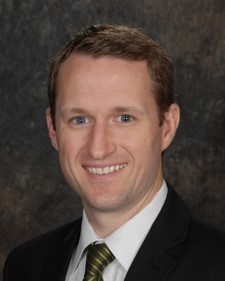
Westney Consulting Group, a Houston-based provider of capital projects-focused services, recently released its 2016 Annual Perspective, which discusses how capital construction has become a major business risk driven by a 60 percent increase in construction costs over the past decade. ALM Intelligence's Nathan Simon recently sat down with Westney's Justin Dahl, Principal & Manager of Consulting Operations.
ALM Intelligence: What is your background and role at Westney Consulting Group?
Dahl: I've been working on capital projects for more than ten years, with half of my experience as a practitioner with Dow Chemical and half as a consultant with Westney and prior to that McKinsey. I'm currently responsible for Westney's consulting operations, a role which involves both engagement planning and scoping as well as client service delivery.
ALM Intelligence: Westney's Annual Perspective details a scarcity of skilled contractor resources contributing to poor construction productivity. What's holding construction back?
Dahl: There are a number of factors that have combined over decades to create this problem. On the project side, we've observed an increase in size and complexity that requires new skills. On the contractor side, companies have historically been rewarded by Wall Street for not retaining the overhead required to effectively manage projects. At the same time, construction has become less attractive as a career, which is creating a demographic deficit as contractors are unable to replace aging talent.
ALM Intelligence:The Annual Perspective suggests that owner companies need to engage earlier in the project lifecycle. Why aren't they doing this now?
Dahl: Excess optimism tends to afflict both operators and their contractors. Executives lock-in on numbers generated early in the project before construction execution is even a consideration, and those numbers get built into construction execution, scheduling, and cost assumptions. Owner project teams and contractors then become committed to delivering the numbers executives expect. Both sides adopt a "we can just build it" attitude, but the reality is they lack the construction skills and resources in the field to do so. What's needed is a top-down view that can treat construction as a business risk and objectively reality-check planning assumptions.
ALM Intelligence: Another source of high construction costs is increased planning and reporting detail that drives a sense of "false accuracy." Why is more granular data leading to poor outcomes in capital projects?
Dahl: As consultants, we live on data and analysis, but there is a limit to what is useful for decision-making. In construction, there is often too much data that takes too long to produce and doesn't enable project leaders to make decisions. Ironically, obtaining the sorts of insights that ought to be common knowledge such as concrete production rates, takes project leaders a week to determine. At the same time, companies also make the mistake of using faulty assumptions, often because they are focused on backwards-looking data, which can cause to them to make the wrong decisions. Westney maintains an industry database on engineering and construction production based on its project experience and industry contracts that is both backwards and forward-looking. We use those benchmarks to help companies validate their assumptions.
ALM Intelligence: The last source of high construction costs relates to confusion on which party, owners or contractors, bears project risks and the need for owners to be able to assess both their and their contractor's capabilities to manage risks. How can owners evaluate those capabilities?
Dahl: Owners need to be able to evaluate capability requirements relative to specific projects in order to determine gaps in their organizations and a realistic population of potential contractors. They then need to be clear on whether they want to fill those gaps internally or hire a contractor with those capabilities. We tend to think about contractors in two categories—"project services" contractors, or those with little risk taking capabilities, and "project delivery" contractors, or those with the capability to take some risk and have greater responsibility for delivering the project. Owners need to think critically about which type of contractor they are selecting, and treat them accordingly. Don't hire a "project services" contractor and expect them to have capabilities to manage risks, and conversely don't delegate to a contractor and then try to micro manage them.
© Arc, All Rights Reserved. Request academic re-use from www.copyright.com. All other uses, submit a request to TMSalesOperations@arc-network.com. For more information visit Asset & Logo Licensing.