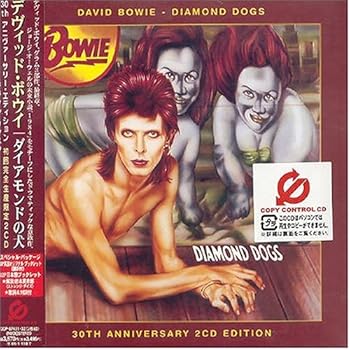
 Cover of Diamond Dogs
Back in the day when I started working in the bond world, I thought I was entering the sleepier side of finance. However, I was soon amazed at how innovative fixed income was. Those guys could squeeze the proverbial blood out of a stone! They found value in places and assets others left for dead. Defunct companies, bottom-of-the barrel junk bonds, mortgages whose borrowers had defaulted – nothing was beyond the pale.
Which brings us to the late David Bowie. Now, don't get me wrong – I'm a big fan. His songs "1984" and "Big Brother" off his 1974 Diamond Dogs album still send chills down my spine. It's just that I never expected to hear "David Bowie" and "securitization" in the same sentence.
But exactly that happened in 1997 when asset-backed securities guru David Pullman worked with Bowie to produce the first securitization of a rock star's future royalties: Bowie Bonds were born. Why did a rock star, already rolling in the dough, do this?
"The young man grew older. He became a parent. He had a costly split from his manager. He moved to Switzerland to reduce his taxes. He had a costly split from his wife. He married again, he would have another child. Now he was 50. How long could he keep at his racket? The papers had wanted him gone years before. So he and his financial adviser devised a scheme. He would give away the royalties to his songs for a decade in exchange for a considerable pile of money." (Chris O'Leary, "The Bowie Bonds," Blog: Pushing Ahead of the Dame; David Bowie, Song by Song [https://bowiesongs.wordpress.com/2013/08/27/the-bowie-bonds/], Accessed January 21, 2016)
By considerable pile of money, he meant $55 million. Pullman and Bowie's creation was received moderately well, surviving a ratings downgrade before coming full term in 2007. A few other notable musical bands and artists took a stab at royalties securitization as well, giving me the memorable pleasure of reading a line in a short, stiff news piece in the Wall Street Journal that went something like, "…issued by Iron Maiden, a pop band known for such hits as 'Bring Your Daughter to the Slaughter…"
But juvenile amusements aside, what's really remarkable about what Bowie did in 1997 is that he did it in 1997. It's not just that he was the first to do this, but that he understood that he would be among the last to do so as well. Bowie was among only a select handful back then who recognized what digital audio files were going to do to his profession, and he understood that the traditional way musicians made their money was going rapidly the way of the dodo. And he cashed in.
People like Bowie – people who have unique insight into where things are going – are rare. Most of us follow the herd, only occasionally poking our head up above the crowd like gophers in search of new information or unique perspectives. We hope we're not like Walt Disney's lemmings. The take-away for Bowie Bonds is that their creators understood how innovation was reshaping an industry, and they acted. Those who band-wagoned probably missed the point; the innovation in what Bowie and Pullman were doing was not in the securitization, but rather in their having the insight to do it exactly then. That says something about the nature of innovation. And as importantly, it says something about the importance of careful, timely action.
© Arc, All Rights Reserved. Request academic re-use from www.copyright.com. All other uses, submit a request to TMSalesOperations@arc-network.com. For more information visit Asset & Logo Licensing.